Shortfilm based on released by ESA over 400000 images from Rosettas comet mission.
2006
Comets pose one of the greatest threats to life on Earth - a threat that can only be countered if we find out more about them. In 2005, in an audacious bid to do just that, NASA scientists launched a space probe to collide with a comet in the emptiness of deep space. This film follows the amazing story of mission Deep Impact, from its inception through to the final nail-biting moments when the probe and comet Tempel 1 met head-on.
2009
Man's landing on the moon was our greatest technological achievement. The Apollo 11 mission was truly the stuff of dreams. For the first time, our species walked on another celestial body. Even more remarkable was their ability to make it back. This is the story of the July 20, 1969, Apollo 11 moon landing. Drama with digitally remastered original footage.
2021
Nearly forty years after the moon landing the men on the mission reveal what really happened. On how close the mission came to disaster.
2016
Svalbard is a norwegian archipelago in the Arctic Ocean where the world's northernmost city is situated. It is a place where the underground, terrestrial and spatial universes blend into each other starting from a coal mine up to Venus.
2008
This movie explores the saga of the telescope over 400 years - the historical development, the scientific importance, the technological breakthroughs, and also the people behind this ground-breaking invention, their triumphs and failures.
1999
Chaco Canyon, located in northwest New Mexico, is perhaps the only site in the world constructed in an elaborate pattern that mirrors the yearly cycle of the sun and the 19-year cycle of the moon. How did an ancient civilization, with no known written language, arrange its buildings into a virtual celestial calendar, spanning an area roughly the size of Ireland?
2012
When filmmaker Ian Cheney moves to New York City and discovers skies almost completely devoid of stars, a simple question – what do we lose, when we lose the night? – spawns a journey to America's brightest and darkest corners. Astronomers, cancer researchers, ecologists and philosophers provide glimpses of what is lost in the glare of city lights. Blending a humorous, searching tone with poetic footage of the night sky, what unravels is an introduction to the science of the dark, and an exploration of the human relationship to the stars.
2022
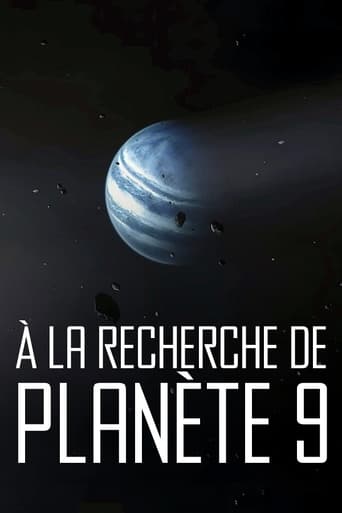
At the edge of our solar system supposedly lies an immense planet. Five to ten times the size of the Earth. Several international teams of scientists have been competing in a frantic race to detect it, in uncharted territories, far beyond Neptune. The recent discovery of several dwarf planets, with intriguing trajectories, have put astronomers on the trail of this mysterious planet. Why is this enigmatic planet so difficult to detect? What would a ninth planet teach us about our corner of the universe? Could it help us unlock some of the mysteries of our solar system?
2020
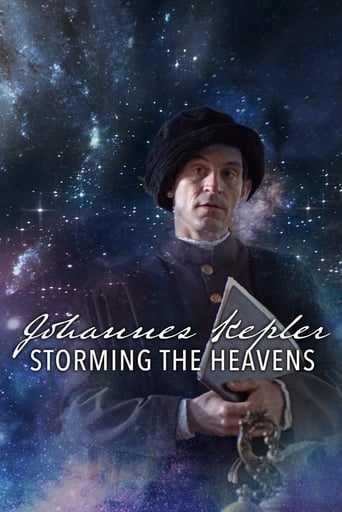
Nowadays we associate Johannes Kepler with his famous laws of planetary motion. But the history of his discoveries is a drama of Shakespearian proportions - full of intrigue, passion, depravity and corruption.
2018
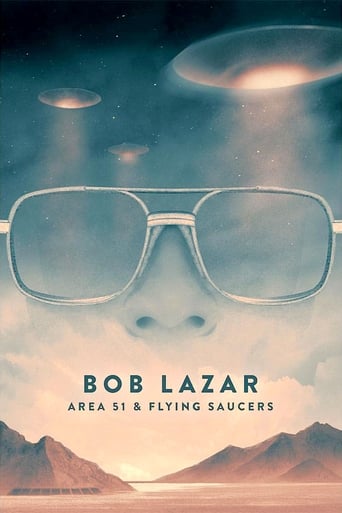
Area 51, flying saucers from another world - and the program to create a fierce technology. Bob Lazar remains the singular most famous and controversial name in the world of UFOs. The reason you know about Area 51 is because Lazar came forward and told you about it. His disclosures have turned his life upside-down and he has tried to stay out of the spotlight. For this reason, he has never let any filmmaker into the private world of his daily life - that is - until now. Corbell’s film explores Lazar’s claims through the lens of thirty years - providing rare and never before revealed footage - guaranteed to alter the landscape of the debate.
For thirty years, NASA's Hubble Space Telescope has discovered new alien worlds, black holes, and the age of the universe itself; NASA astronauts reveal the secret history of the life-or-death missions to keep this complex machine working.
2010
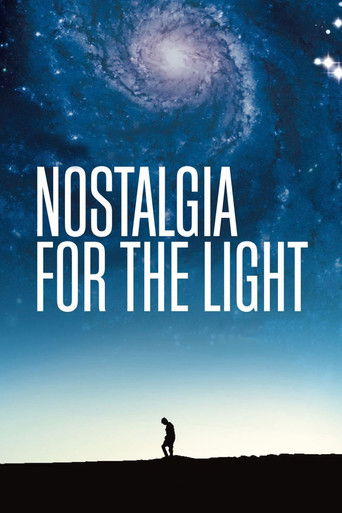
In Chile's Atacama Desert, astronomers peer deep into the cosmos in search for answers concerning the origins of life. Nearby, a group of women sift through the sand searching for body parts of loved ones, dumped unceremoniously by Pinochet's regime.
2011
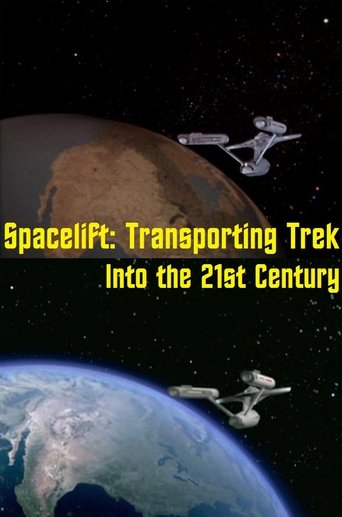
Spacelift Transporting Trek Into The 21st Century, shows you how they Remastered The Special Effects from Star Trek Classic to CGI, the re recording of the theme music and the look of the Enterprise.
2024
1874
Photo sequence of the rare transit of Venus over the face of the Sun, one of the first chronophotographic sequences. In 1873, P.J.C. Janssen, or Pierre Jules César Janssen, invented the Photographic Revolver, which captured a series of images in a row. The device, automatic, produced images in a row without human intervention, being used to serve as photographic evidence of the passage of Venus before the Sun, in 1874.
2015
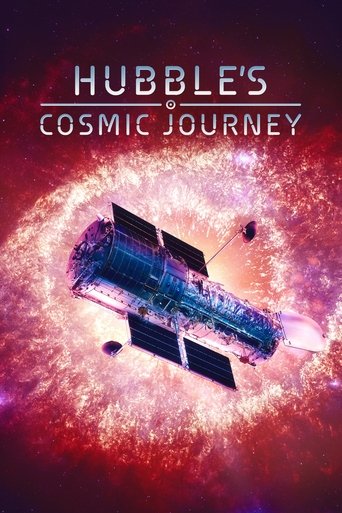
This is your window into the universe… Hubble was launched in April 1990 on board Space Shuttle Discovery. Its release into orbit over 500km above the Earth marked the birth of one of humanity’s biggest dreams; to place a telescope into space, high above the obscuring effects of the atmosphere, to gain the clearest view of the cosmos we could hope to see. But in the months which followed it was clear that the dream had turned into a nightmare, as Hubble’s mirror was found to have a flaw. Three years of heartache and huge human resolve followed, to mount a rescue mission to fix the flaw. The results were breath taking and produced the most complete view of the Universe we’ve ever had. This is the story of the men and women who conceived, built, fixed and operated Hubble – the most celebrated science instrument in history.
Documentary which uses the latest, most detailed imagery to reveal the monthly life cycle of the moon. From Wales to Wyoming, Hong Kong to Croydon, the programme finds out how the moon shapes life on Earth, as well as exploring its mysterious dark side and discovering how the moon's journey around Earth delivers one of nature's most awe-inspiring events - a total solar eclipse. And at the end of a remarkable year of lunar activity, we find out why so many supermoons have been lighting up the night sky.
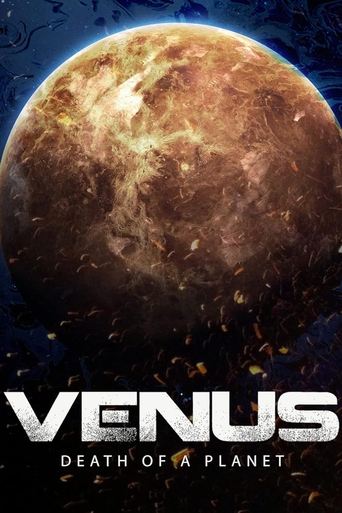
Billions of years ago, Venus may have harbored life-giving habitats similar to those on the early Earth. Today, Earth's twin is a planet knocked upside down and turned inside out. Its burned-out surface is a global fossil of volcanic destruction, shrouded in a dense, toxic atmosphere. Scientists are now unveiling daring new strategies to search for clues from a time when the planet was alive.
What forms might life take in the Solar System and beyond? In the Academy's newest original planetarium show, see how a deeper understanding of Earth might help us locate other living worlds, light years away.