2026
Capturing the biggest, most complex, most stressful and most dangerous engineering projects around the world, Megabuilders chronicles the most awe-inspiring construction projects in modern engineering.
The Oddity Archive is a web series that revolves around the "cultural dustbin", especially as it pertains to media. The Archive also functions as an actual archive of sorts, with a modest collection of off-air Betamax and VHS recordings (about 400 total as of June, 2014). There's also a decent collection of ephemeral video, "ripoff" and "drugstore" LP's/cassettes/8-tracks, as well as (working) obsolete technology.
C'est pas sorcier is a French educational television program that originally aired from November 5, 1994 to present.
Enjoying the best and worst of new and old technology.
A look inside one of the world’s biggest startup nations - Israel, and Shenzhen, looking at how and why the city has evolved so rapidly.
MISSION X tracks down the mysteries that triggered spectacular turning points in our history. Alert minds with the courage to go new and different ways, with ideas and a sense of adventure, created the remarkable turns of events that were responsible for making us what we are today.
Your user-friendly guide to the latest technology news, issues, gadgets and apps.
Weekly news, commentary, and reviews for the Linux and Open Source Software communities.
State of the art science, thrilling suspense, unforgettable characters. These are the true stories of a new wild west, where biology, physics, chemistry, and technology are tools of the outlaw trade. With complex security systems designed to stop the world's most nefarious criminal masterminds, go inside amazing capers to unpack the high-tech arsenal used on both sides of the law.
The New Screen Savers is a variety show for tech. The show stars Leo Laporte and is co-hosted by Megan Morrone, Jason Howell, Fr. Robert Ballecer, and Bryan Burnett. Viewers get live tech help, interesting guests, insights into the latest innovations, products and trends, plus lots of fun things thrown in, too. There will also be special guest co-host appearances from Patrick Norton, Kate Botello, Kevin Rose, Martin Sargent, and more.
The Russian army has no shortage of weapons despite sanctions: With an arsenal mixing old Soviet stocks and modern hypersonic weapons, the country could strike Europe in minutes. An opaque network of spies, shell companies and oligarchs ensures its war capacity through the arms trade, technology theft and state-organized policy of terror.
This show addresses issues related to the Brazilian way of life, highlighting matters such as health, education, work and nature.
A century ago, the world experienced a revolution in mobility. Cities like Berlin grew rapidly, with the Graf Zeppelin soaring over the city in 1928, sparking excitement for airship travel. These majestic airships made ocean crossings faster and more luxurious, and even enabled polar expeditions. At the same time, automobiles and motorcycles became staples for many, although streets became congested. Women like Amelia Earhart and Elly Beinhorn broke barriers in aviation, inspiring new possibilities for both genders in the field of technology. While air travel grew in popularity, trains remained the main long-distance transport. The era also saw an explosion of new mobility options, with faster, cheaper ways to travel across the globe, making the world seem smaller and more connected. However, this golden age of mobility would be cut short by the outbreak of World War II.
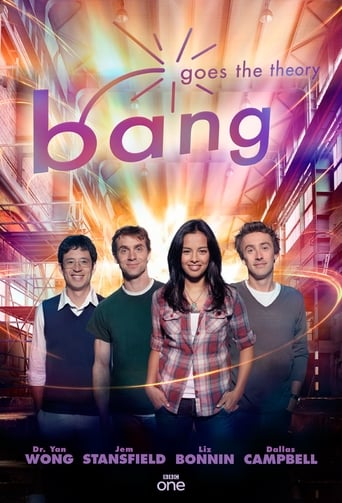
Dallas Campbell, Liz Bonnin, Jem Stansfield and Dr. Yan Wong take on the scientific world by devising their own ingenious ways of explaining cutting-edge developments in technology.
The history of our modern Indo-Arabic numeral system begins in Mesopotamia, leads through India to the Arab world – and from there around the globe. This three-part series explores how the "Arabic numerals" began their triumphant march and the special role that zero played in this process. From its beginnings to modern computer science – today, numbers are the universal language of the world.
We have been colonised by the machines we have built. Although we don't realise it, the way we see everything in the world today is through the eyes of the computers.